Ceramic type | Iron(III) oxide uses | Typical product examples |
Building ceramics | Firing body color of wall and floor tiles (red brick color), glaze color adjustment, gold sand glaze (metallic flash effect) | Polished brick, antique brick, gold sand glaze brick |
Sanitary ceramics | Add a small amount to adjust whiteness (iron must be strictly controlled, otherwise it turns yellow) | Toilet, wash basin (usually low iron required) |
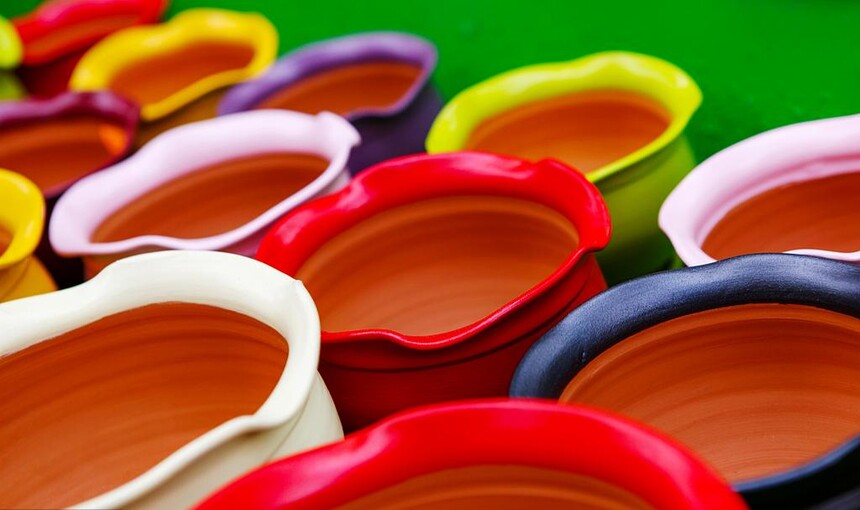
Daily ceramics | Red and brown pottery bodies; underglaze and overglaze pigments | Purple clay teapot, celadon (with a trace of iron参与coloration) |
Art ceramics | Main colorants! For flower glaze, iridescence, kiln change glaze | Jingdezhen porcelain, Tang tri-colored glazed pottery, rainbow bottle |
Industrial ceramics | The iron content in refractories must be strictly limited (each increase of1% Fe₂O₃, refractoriness ↓10℃!) | Ovenware, crucible |
Special ceramics | Specialty functional ceramics (such as magnetic ceramics) are mainly based on ferrites, but not traditional iron oxide pigments. | Ferrite core |
Garden glass and ceramic | Traditional low-temperature lead glaze with added iron oxide to make red, yellow, brown | Ridge Beast; glazed tiles |